
Colleges can significantly reduce energy costs and improve indoor comfort by upgrading to high-efficiency HVAC systems. These systems use advanced technologies like Energy Recovery Ventilation (ERV), Variable Refrigerant Flow (VRF), and heat pumps to cut energy consumption by 20%–40% or more. For example, Emporia State University saved $36,000 in six months by optimizing existing HVAC systems, while UC Davis saved $11 million over nine years through better controls and scheduling.
Key benefits include:
- Lower energy costs: HVAC upgrades can save millions annually, with payback often supported by utility rebates and federal incentives.
- Reduced carbon emissions: Electrified systems and energy-efficient designs help colleges meet sustainability goals.
- Improved indoor air quality: Advanced filters and ventilation systems create healthier learning environments.
Implementation requires careful planning:
- Assess current systems through energy audits.
- Upgrade to efficient equipment like VRF systems and heat pumps.
- Add smart controls for optimized performance.
- Work with skilled contractors for proper installation and long-term maintenance.
Regular upkeep, such as filter replacements and system calibration, ensures these systems remain effective over decades. High-efficiency HVAC systems not only cut costs but also modernize aging campus infrastructure, creating better spaces for students and staff.
Delivering HVAC & Energy Efficiency at Academy for Global Citizenship (AGC)
sbb-itb-034f8e1
What Are High-Efficiency HVAC Systems?
High-efficiency HVAC systems are designed to provide heating, cooling, and ventilation while using significantly less energy than traditional setups. Advanced systems, often referred to as VHE HVAC systems, combine high-efficiency energy recovery ventilation (ERV) with space conditioning systems like VRF (Variable Refrigerant Flow) or heat pumps. This integration minimizes energy waste during air exchange, creating a more energy-efficient process[7].
On average, these systems can reduce energy consumption by 69% compared to conventional HVAC setups[7]. Considering that HVAC systems account for about 48% of a building’s total energy use, these savings translate into lower utility bills and reduced carbon emissions – key benefits for budget-conscious institutions like college campuses.
Core Technologies in High-Efficiency HVAC
Several advanced technologies work together to achieve these energy savings:
- Energy Recovery Ventilation (ERV): Captures energy from indoor air being exhausted and uses it to pretreat incoming outdoor air, reducing the workload of heating and cooling equipment.
- Variable Refrigerant Flow (VRF): Adjusts the amount of refrigerant used to match fluctuating heating or cooling demands throughout the day[7].
- Heat Pumps: Transfer heat rather than generating it through combustion, making them efficient for both heating and cooling needs.
- Variable Frequency Drives (VFDs): Adjust motor speeds based on demand, avoiding the inefficiency of motors running at full capacity when it’s not needed[3].
- Demand-Controlled Ventilation (DCV): Monitors CO₂ levels to adjust ventilation rates according to occupancy, preventing energy waste in unoccupied or lightly used spaces like lecture halls[3].
- Dedicated Outdoor Air Systems (DOAS): Treat ventilation air separately, allowing for smaller ductwork and precise control – especially beneficial in dormitories or older buildings undergoing renovations[3].
These technologies provide the foundation for the energy savings and efficiency that high-performance HVAC systems deliver.
How These Systems Reduce Energy Use
High-efficiency HVAC systems achieve energy reductions through three main strategies: load matching, energy recovery, and optimized controls.
- Load Matching: These systems are designed to perform efficiently at part-load conditions, which occur 97.5% to 99% of the time in actual operation[8]. Components like VRF systems, variable-speed chillers, and modulating flame boilers adjust their output to meet the exact heating or cooling demands, avoiding the waste associated with oversized equipment running unnecessarily at full capacity[8].
- Energy Recovery: Heat or coolness that would typically be lost when expelling stale air is captured and used to precondition fresh outdoor air before it enters the building. This reduces the energy needed to maintain indoor temperatures.
- Optimized Controls: Advanced control systems, such as pressure-independent control valves and CO₂ sensors, ensure energy is only used where and when it’s needed. This optimization can lead to energy savings of 10%–40%, and in some cases, up to 70%[8].
Benefits of High-Efficiency HVAC for College Campuses
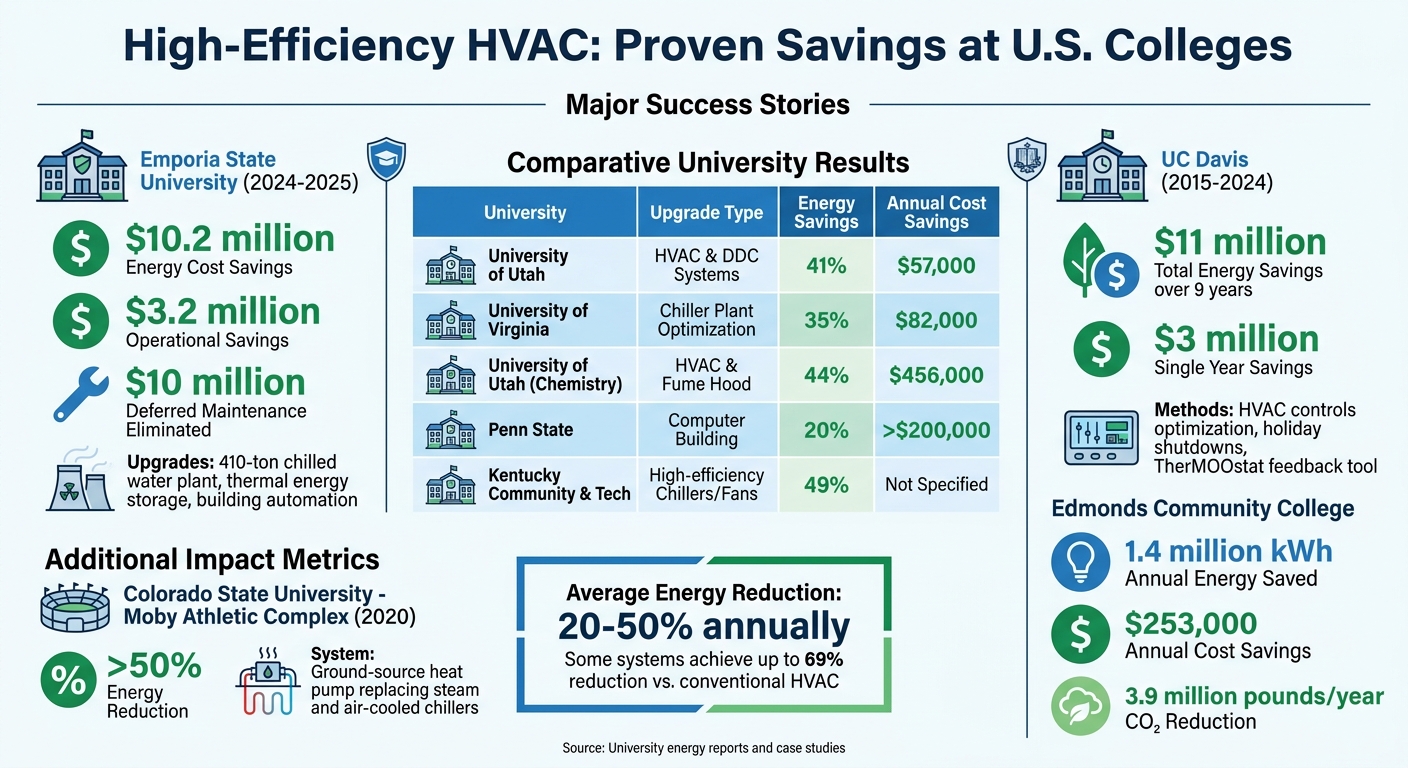
College HVAC Energy Savings: Real Results from University Upgrades
Switching to high-efficiency HVAC systems offers a range of benefits that go beyond just cutting energy use. These systems help colleges manage budgets more effectively, reduce their environmental impact, and create healthier spaces for students and staff.
Lower Energy Costs
On college campuses, HVAC systems are often the largest energy consumers, making them a prime focus for cost-saving upgrades[10]. High-efficiency systems can cut energy usage by 20% to over 50% annually, directly supporting more economical campus operations[6].
For instance, Emporia State University upgraded its HVAC system between 2024 and 2025, including a 410-ton chilled water plant, thermal energy storage, and building automation. These changes are projected to save $10.2 million in energy costs, $3.2 million in operational expenses, and eliminate $10 million in deferred maintenance[4].
Similarly, UC Davis achieved impressive results between 2015 and 2024 under the guidance of Nico Fauchier-Magnan. By optimizing HVAC controls, implementing holiday shutdowns, and using the "TherMOOstat" feedback tool, the university saved $11 million in energy costs. In one year alone, they saved $3 million, fully repaying their campus investment while continuing to generate annual savings:
"We’ve been cost‑positive on an annual basis for a few years – saving $3 million last year and more than $2 million the year before – but this year we passed the threshold of repaying campus to offset the entire investment in our team so far."[10]
Savings are further boosted by utility rebates, state grants, and federal incentives like those provided by the Inflation Reduction Act[9][4]. Thermal energy storage also shifts cooling loads to off-peak hours, reducing peak energy costs.
| Institution | Primary HVAC Action | Energy Savings | Annual Cost Savings |
|---|---|---|---|
| University of Utah | HVAC & DDC System Upgrades | 41% | $57,000 |
| University of Virginia | Chiller Plant Optimization | 35% | $82,000 |
| University of Utah (Chemistry) | HVAC & Fume Hood Upgrades | 44% | $456,000 |
| Penn State | Computer Building Upgrades | 20% | >$200,000 |
| Kentucky Community & Tech | High‑efficiency Chillers/Fans | 49% | Not Specified |
Beyond financial savings, these upgrades play a major role in reducing campus carbon emissions.
Reduced Carbon Footprint
High-efficiency systems are key to shifting campuses away from fossil-fuel-based steam systems. Electrified HVAC solutions, such as Variable Refrigerant Flow (VRF) systems and advanced heat pumps, coupled with Building Automation Systems, create a smart, energy-optimized ecosystem.
For example, Colorado State University revamped the HVAC system in its Moby Athletic Complex in 2020, replacing steam and air-cooled chillers with a ground-source heat pump system. This cut energy use by over 50%[6]. Likewise, Edmonds Community College in Washington replaced central plant boilers with modular high-efficiency units and installed Variable Frequency Drives as part of an Energy Savings Performance Contract. According to Kevin McKay, Vice President of Finance and Operations, these upgrades saved 1.4 million kWh annually, reduced energy costs by $253,000 per year, and slashed CO₂ emissions by 3.9 million pounds annually[11].
Features like energy recovery units and demand-controlled ventilation further cut energy needs while maintaining excellent indoor air quality. Together, these measures not only lower emissions but also improve the overall campus environment.
Better Indoor Air Quality and Comfort
Modern high-efficiency HVAC systems don’t just save energy – they also enhance indoor air quality and comfort. Advanced filters like MERV 13 or HEPA can capture fine particulates, allergens, and pathogens, with HEPA filters trapping 99.97% of particles as small as 0.3 microns[12].
Energy Recovery Ventilators (ERVs) and Dedicated Outdoor Air Systems (DOAS) replace stale air with filtered outdoor air, reducing levels of volatile organic compounds (VOCs) and CO₂. Demand-Controlled Ventilation (DCV) uses CO₂ sensors to adjust fresh air intake during peak occupancy, ensuring a healthier environment[3][12]. Maintaining indoor humidity between 40% and 60% also curbs viral survival rates and prevents mold and dust mite growth[12]. Meanwhile, technologies like VRF and advanced heat pumps provide consistent temperature control, even in extreme weather conditions[3][4].
How to Implement High-Efficiency HVAC in Colleges
Switching to high-efficiency HVAC systems in colleges involves thoughtful planning. Schools need to evaluate their current systems, choose the right equipment, incorporate smart controls, and collaborate with skilled contractors who understand the specific needs of academic facilities.
Evaluate Your Current HVAC System
Start by assessing your existing HVAC setup. Over time, buildings often deviate from their original design due to patchwork fixes or installation errors [13]. Conduct energy audits and benchmarking to pinpoint areas where energy is being wasted [14][16]. Use diagnostic tools like gauges, thermometers, and electronic meters to troubleshoot mechanical, electrical, and refrigeration components, which are often unique to campus environments [15].
If your units still use R-22 (Freon®), prioritize replacing them as this refrigerant is being phased out due to environmental regulations [5]. A helpful guideline is the "5,000 Rule": multiply the unit’s age by the repair cost. If the result exceeds $5,000, replacing the equipment is usually more cost-effective [5]. For campuses with central chilled-water or steam systems, consider metering these utilities at the building level for more accurate energy tracking [2]. Also, assess whether your maintenance team is ready to handle advanced technology before committing to complex systems [2].
Once inefficiencies are identified, the next step is upgrading to equipment that better suits campus needs.
Upgrade to High-Efficiency Equipment
Modern HVAC systems can cut energy costs by 20% to 40% compared to older models, and ENERGY STAR®-certified units can provide an additional 15% in savings [5]. Variable Refrigerant Flow (VRF) systems, advanced heat pumps, and high-efficiency chillers are particularly effective in academic settings.
Before upgrading, perform load calculations to ensure the equipment is properly sized. Oversized systems often run inefficiently, especially beyond the 1–2.5% peak load range [8]. If you’re considering systems like chilled beams, make sure the building envelope is well-sealed and coordinate with architects on thermal and vapor barrier requirements [2]. For campuses with central plants, improving the "Delta T" of chilled water – by optimizing terminal coils and heat exchangers – can further enhance efficiency [2].
After installing high-efficiency equipment, the next focus should be on optimizing performance with smart controls.
Add Building Automation Systems (BAS)
Building Automation Systems (BAS) allow for precise, data-driven HVAC management. These systems provide real-time insights, enabling better scheduling and control, such as generating cooling capacity during off-peak hours [1]. For example, Emporia State University’s pilot program showed how data-driven optimization can lead to significant energy savings [1].
"A process that isn’t measured cannot be improved."
– Peter Hauff, Director of Facility Planning, Emporia State University [1]
Active metering across campus supplies the data needed for an Energy Management System (EMS), which can forecast demand and analyze usage trends [11]. Replacing manual controls with Variable Frequency Drives (VFDs) on fans can also improve energy efficiency [11]. Since academic buildings often house diverse spaces – like labs, lecture halls, and dormitories – a BAS allows for precise control of temperature, humidity, and ventilation tailored to each area [2].
Work with Design-Build Contractors
Achieving high-efficiency HVAC requires a "whole building design" approach that addresses architectural and engineering needs from the start [8]. Design-build contractors, such as E3 Design-Build Contractor, bring expertise in higher education projects. They help colleges focus on the total cost of ownership, including maintenance, replacement cycles, and ease of operation, rather than just initial costs [2].
"By looking at the design through a total cost-of-ownership lens that includes maintenance and replacement of systems as well as operator experience with the HVAC system, the true value of the designed systems can be identified."
– Julianne Laue, Senior Energy Engineer, Mortenson Construction [2]
Choose contractors who provide a written "Basis of Design" early in the project, outlining clear energy consumption and cost goals. They should also offer comprehensive commissioning programs to test systems under various conditions and train staff for ongoing operations [8]. E3 specializes in energy-efficient solutions tailored to public institutions, including colleges in Texas. Their services range from high-efficiency HVAC installations to automation and infrastructure upgrades, ensuring long-term energy savings and operational improvements.
Maintenance Tips for Long-Term Efficiency
Installing high-efficiency HVAC systems is just the starting point. To ensure they deliver consistent performance and avoid wasting energy, regular maintenance is essential.
Regular Maintenance Tasks
For high-traffic spaces like lecture halls or libraries, replace MERV-13+ filters every month. In less busy areas, such as administrative offices, quarterly replacements are sufficient. Clean evaporator and condenser coils annually – just 0.042 inches of dirt buildup can reduce heat exchanger efficiency by as much as 21% [17]. Dirty filters also increase energy usage by 5% to 15% because motors have to work harder [18].
Plan major maintenance activities, like chiller overhauls, coil cleaning, and boiler inspections, during summer or winter breaks to minimize disruptions to classes [18]. Check belts and bearings every three months to avoid fan malfunctions, and flush condensate drains monthly during cooling seasons to prevent mold and maintain good indoor air quality [18]. Properly maintained air handling units can last 20–25 years, compared to just 10–15 years for neglected ones [18].
In addition to these tasks, systematic monitoring and calibration are crucial to keep the system running smoothly.
Monitor and Calibrate Systems
Routine cleaning is important, but fine-tuning your system through monitoring and calibration takes efficiency to the next level. For instance, calibrate Building Automation System (BAS) sensors twice a year to avoid issues like simultaneous heating and cooling [18]. Cross-check physical temperature readings at air handlers with system sensors to ensure accuracy [21]. Regularly calibrate Variable Frequency Drives (VFDs) to make sure fans adjust to actual airflow needs.
Test economizer actuators and lubricate their linkages every six months. Faulty economizer dampers can waste 20% to 30% of cooling energy if they fail to take advantage of outdoor air when conditions are right [18]. Keep an eye on pressure drops across filter banks and coils – significant drops often indicate fouling, which forces the system to work harder [21]. Finally, align HVAC schedules with building use by setting unoccupied temperature setbacks: 55–60°F for heating and 85–90°F for cooling when spaces are empty [22].
Address Issues Early
Even with a solid maintenance routine, catching small issues early can prevent costly breakdowns. Problems like worn belts, unlubricated bearings, or minor refrigerant leaks can escalate into major failures if ignored [20]. For example, a refrigerant charge just 10% below the recommended level can reduce compressor efficiency by over 20% [17]. Using IoT sensors to track vibration, temperature, and energy anomalies can help spot these issues before they become serious [20].
"We’re moving away from simply fixing things when they break and instead using real-time data to predict when maintenance is needed. This kind of proactive approach is a game-changer for avoiding downtime."
– David Kardos, Global Manager – Replacement Market Services, Evapco [20]
Proactive maintenance is also far more cost-effective. While preventive maintenance typically costs $6–$10 per square foot annually, reactive "break-fix" methods can run $18–$24 per square foot [18]. Scheduled maintenance reduces emergency failures by 85% [18], ensuring classrooms remain comfortable and operations stay uninterrupted. Plus, every dollar spent on deferred maintenance can lead to $4 to $6 in future repair costs [19], making early action a smart financial decision.
Conclusion
High-efficiency HVAC systems provide colleges with a practical way to cut energy costs, achieve environmental goals, and improve campus environments. Institutions like Emporia State and Edmonds Community College have already demonstrated the potential, saving millions in energy expenses while substantially lowering carbon emissions [4][11]. Upgrading to modern HVAC systems doesn’t just enhance infrastructure – it sets a standard for responsible energy use and operational improvement.
The key to success lies in focusing on energy efficiency through high-performing HVAC systems, advanced controls, and automation before integrating renewable energy sources [2]. Addressing energy waste first ensures immediate savings and builds a strong foundation for long-term sustainability. This approach is especially critical as colleges manage roughly 5 billion square feet of campus space, often grappling with outdated infrastructure and budget constraints [6].
To maximize these benefits, proper planning and ongoing maintenance are essential. Start by conducting an energy audit, targeting areas with the highest energy demand, and exploring financing options like Energy Savings Performance Contracts (ESPCs). Once installed, regular upkeep ensures that these systems deliver consistent energy savings throughout their 20–25 year lifespan [18].
Dr. Zheng O’Neill from Texas A&M University emphasizes the importance of such upgrades:
"Enhancing building efficiency represents one of the easiest, most immediate, and most cost-effective ways to reduce energy consumption while keeping buildings sustainable and healthy" [23].
For colleges dedicated to operational efficiency and environmental responsibility, investing in high-efficiency HVAC systems is a forward-thinking decision. Collaborate with experts like E3 Design-Build Contractor to ensure smooth implementation and long-lasting results.
FAQs
Which campus buildings should be upgraded first for the biggest HVAC savings?
Buildings that consume the most energy and offer room for efficiency improvements should take precedence. Examples include large lecture halls, administrative offices, and residence halls. These spaces often have high HVAC demands, making them prime candidates for upgrades that could result in substantial energy savings.
How do colleges pay for high-efficiency HVAC upgrades without large upfront costs?
Colleges have options to upgrade to high-efficiency HVAC systems without needing substantial upfront funds. Methods like energy savings performance contracting (ESPC), leases, loans, debt financing, or tapping into internal funds allow institutions to spread costs over time. These approaches rely on the energy savings generated by the upgrades to offset expenses, reducing the burden of large initial investments.
What maintenance tasks keep high-efficiency HVAC systems performing long-term?
Regular upkeep is key to keeping HVAC systems running smoothly. Tasks like cleaning coils, replacing filters, and calibrating economizers help minimize energy waste and avoid breakdowns. It’s also important to routinely check refrigerant levels, pressure, and other system components to catch issues early.
A computerized maintenance management system (CMMS) can make this process easier by automating inspections and repair schedules. This not only ensures tasks are done on time but also helps extend the system’s lifespan while maintaining optimal energy efficiency.