
Pre-commissioning planning ensures schools are built and operate as they should, improving energy efficiency, comfort, and long-term cost savings. By involving a commissioning agent during the design phase, schools can identify and fix issues early, leading to better-performing systems and reduced maintenance needs. Key takeaways include:
- Energy Savings: Schools can lower operating costs by 5–20% and achieve median energy savings of 14%.
- Improved Comfort: Properly functioning HVAC systems and building envelopes enhance air quality and thermal stability.
- Reduced Maintenance Costs: Early issue detection minimizes costly repairs and system failures later.
- Cost Efficiency: Commissioning costs $0.10–$0.30 per square foot but pays off with quick returns, often within 4–20 months.
Skipping pre-commissioning often leads to higher energy costs, uncomfortable environments, and frequent maintenance problems. Early planning is essential for better school performance and lower long-term expenses.
1. Schools with Pre-Commissioning Planning
Energy Savings
When schools bring in a commissioning agent during the schematic design phase, they can significantly cut operating expenses. Early commissioning ensures that systems are optimized to match the design goals, reducing unnecessary energy use. Studies have shown that commissioning can lower building operating costs by anywhere from 5% to 20% [3].
Take the Central Kitsap School District as an example. In 2005, they focused on retro-commissioning Silver Ridge Elementary, a 50,000-square-foot school, and upgrading its Direct Digital Control (DDC) system. Under the leadership of Richard Best, Director of Capital Projects, and Commissioning Agent George Kevins, the school achieved a 32% drop in energy use and avoided $22,000 in costs in the first year alone. Even with colder weather the next year, the school still managed to maintain a 20% energy reduction, saving an additional $6,000. Since 2001, the district has successfully secured over $800,000 in grants and rebates by using commissioning data to demonstrate expected energy savings [4].
But the benefits of early commissioning go beyond just saving money – it also improves the overall indoor environment.
Occupant Comfort
Pre-commissioning planning plays a key role in creating a comfortable and productive learning environment. It ensures HVAC systems provide consistent temperatures, better airflow, and quieter operation. This process includes steps like verifying proper outdoor air supply and keeping components, such as cooling coils, clean to prevent odors and humidity issues. Additionally, properly sealed and calibrated building envelopes help maintain thermal comfort and air quality, minimizing disruptions in the classroom.
Operational Efficiency
Pre-design commissioning doesn’t just focus on energy savings – it also helps schools run more efficiently. By establishing the Owner’s Project Requirements (OPR) early on, it ensures that energy efficiency and performance goals are in sync with the school’s long-term objectives [2]. Involving a commissioning provider at this stage reduces the likelihood of costly fixes later and cuts down on contractor callbacks after project turnover. This proactive approach also boosts the reliability of mechanical and life safety systems [3].
Another benefit? Comprehensive commissioning includes training for building staff and detailed operations and maintenance manuals, enabling them to handle complex systems with confidence [1]. For example, E3 Design-Build Contractor has applied these methods, integrating advanced HVAC systems and automation to deliver measurable energy savings, improved comfort, and dependable operations.
sbb-itb-034f8e1
2. Schools without Pre-Commissioning Planning
Energy Savings
Skipping pre-commissioning planning can increase operating costs by anywhere from 8% to 20% [5]. Without early design reviews, schools often end up with oversized HVAC systems, which not only consume more energy but also lead to higher peak demand charges [5].
Another issue is poorly calibrated sensors and control devices, which can cause equipment to run unnecessarily, wasting energy [5]. On top of that, construction debris – like dust clogging cooling coils – often goes unnoticed, forcing systems to work harder than they should [1]. These inefficiencies mean schools miss out on potential energy savings of 13% to 16%, which commissioning could have delivered [5]. Beyond the financial impact, these energy inefficiencies also compromise the quality of the indoor environment.
Occupant Comfort
When commissioning is skipped, schools often end up with uncomfortable indoor environments. The U.S. EPA points out:
if the building materials, equipment and systems weren’t installed properly or aren’t operating as intended, the health, productivity and other benefits of high performance design will not be achieved [1].
Problems like musty odors, high humidity, and insufficient fresh air are common. For instance, in one case, a clogged cooling coil in Zone 2 of a school went unnoticed, leading to poor moisture removal and airflow. This caused a musty odor, damaged library materials, and posed risks to occupants’ health [1]. Without pre-occupancy commissioning, these types of issues often go unresolved, creating long-term comfort and operational challenges.
Operational Efficiency
Schools that skip pre-commissioning planning frequently face ongoing maintenance issues and unreliable systems. Facility staff often receive incomplete documentation – like missing manuals, inaccurate zone maps, or insufficient training – which turns minor construction oversights into major maintenance headaches [1].
The financial toll can be steep. According to the WBDG Commissioning Committee:
the cost of not commissioning is equal to the increased costs of correcting design and construction deficiencies later, plus the costs of inefficient operations [2].
Nearly half of the deficiencies identified during commissioning eventually result in higher repair and maintenance expenses [5]. Additionally, systems that aren’t properly commissioned are more likely to malfunction during startup and shutdown, leading to frequent contractor callbacks and shorter equipment lifespans [6]. Schools without pre-commissioning planning miss out on smoother operations and long-term savings, leaving them to deal with unresolved problems that could have been prevented early on.
The Commissioning Process in Building Codes and Standardsz
Advantages and Disadvantages
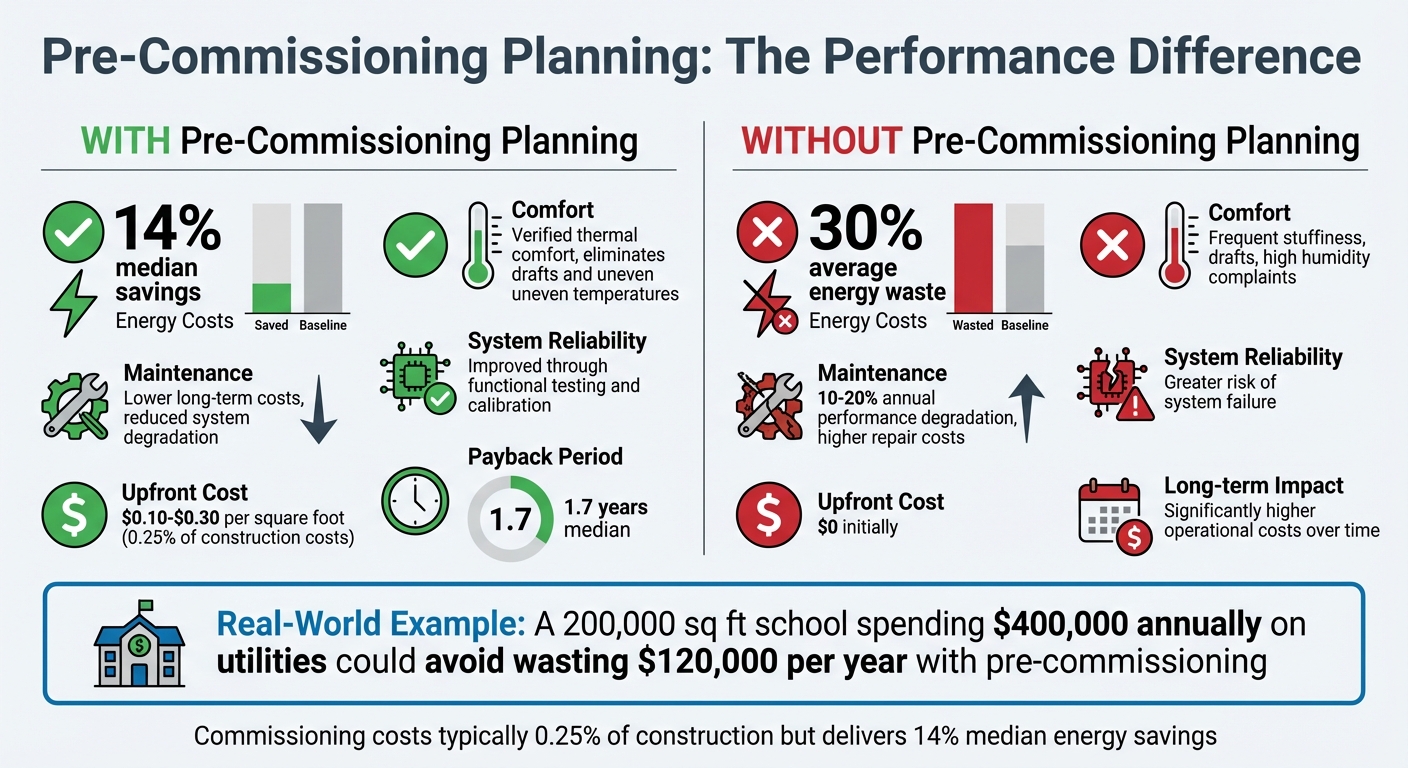
Pre-Commissioning Planning Impact on School Performance: Cost and Efficiency Comparison
Pre-commissioning planning can deliver impressive financial returns. For K-12 schools, commissioning typically results in a 14% median energy savings, while skipping this process leads to an average 30% energy inefficiency [7]. To put this into perspective, a 200,000-square-foot school spending $400,000 annually on utilities could avoid wasting $120,000 per year, with a median payback period of just 1.7 years [7]. Beyond energy savings, this process significantly boosts overall facility performance.
Better energy performance also translates into improved indoor air quality and thermal comfort. Schools that undergo proper commissioning avoid common problems like musty odors, high humidity, and inadequate fresh air – all of which can affect student health and productivity [1]. On the other hand, schools that skip commissioning often deal with uneven temperatures, drafts, and a general sense of stuffiness [8].
Commissioning doesn’t just save energy and improve comfort – it also cuts long-term maintenance costs. Without pre-commissioning, systems can degrade by 10–20% annually due to issues like sensor drift and overridden controls, leading to higher repair expenses and shorter equipment lifespans [7]. The table below highlights the differences between facilities with and without pre-commissioning planning:
| Metric | With Pre-Commissioning Planning | Without Pre-Commissioning Planning |
|---|---|---|
| Energy Costs | 14% median savings [7] | 30% average energy waste [7] |
| Comfort Measurements | Verified thermal comfort; eliminates drafts and uneven temperatures [8] | Frequent complaints of stuffiness, drafts, and high humidity [8] |
| Maintenance Expenses | Lower long-term costs [1] | 10–20% annual performance degradation; higher repair costs [7] |
| System Reliability | Improved through functional testing and calibration [1] | Greater risk of system failure [8] |
| Commissioning Cost | $0.10 to $0.30 per square foot [1] | $0 upfront but significantly higher operational costs over time |
Although commissioning involves an upfront cost of $0.10 to $0.30 per square foot – roughly 0.25% of total construction costs [7] – the investment pays off quickly through reduced expenses and improved performance. Schools aiming to achieve these benefits can work with specialized design-build contractors like E3 Design-Build Contractor, who focus on energy-efficient solutions tailored to educational facilities.
Conclusion
Pre-commissioning planning plays a key role in separating cost-effective schools from those burdened with higher operating expenses. Research shows that commissioning efforts in schools can result in median energy savings of 13% for new constructions and 16% for existing buildings [5]. On the flip side, schools that skip pre-commissioning may face operating costs that are 8–20% higher [5]. Beyond the financial benefits, commissioned schools enjoy better indoor air quality, stable temperatures, and reduced long-term maintenance needs. These advantages make a strong case for action.
Bringing a commissioning agent on board during the pre-design phase is crucial. Early involvement allows for the detection of design issues when they’re easiest – and cheapest – to fix. As the U.S. Environmental Protection Agency highlights:
If commissioning reveals problems with design or construction, the district then has the authority to make the responsible parties fix the problems up front instead of dealing with maintenance problems or poor performance down the road [1].
It’s also essential to outline commissioning requirements clearly in construction documents. This ensures contractors are fully aware of their obligation to address any non-compliant conditions. Prioritize systems that directly impact student well-being and energy efficiency, such as HVAC systems, building envelopes, and kitchen equipment. Additionally, involve facility staff in testing processes to boost their confidence in operating these systems effectively.
FAQs
What happens during pre-commissioning planning for a school?
Pre-commissioning planning is all about ensuring that school buildings and their systems are built and operate as they should. This process involves several key steps, such as preparing detailed checklists, working closely with contractors, and thoroughly inspecting important systems like HVAC and lighting. By addressing potential issues early on, this approach helps guarantee energy efficiency, comfort, and reliability in daily operations. It also minimizes the risk of future maintenance headaches, creating a smoother and more dependable school environment.
Which systems should a school commission first?
Schools should focus on commissioning their HVAC systems as part of the building commissioning process. This step ensures the systems operate correctly, promote energy efficiency, and enhance indoor air quality – key factors for maintaining a comfortable and healthy learning environment.
How can districts fund commissioning with rebates or grants?
School districts have opportunities to secure funding for commissioning through various government rebates and grants. These programs are specifically designed to encourage energy-efficient upgrades and promote high-performance building practices. Federal or state initiatives, including those from the US EPA, often offer incentives for projects that aim to enhance energy efficiency and improve indoor air quality within schools.