
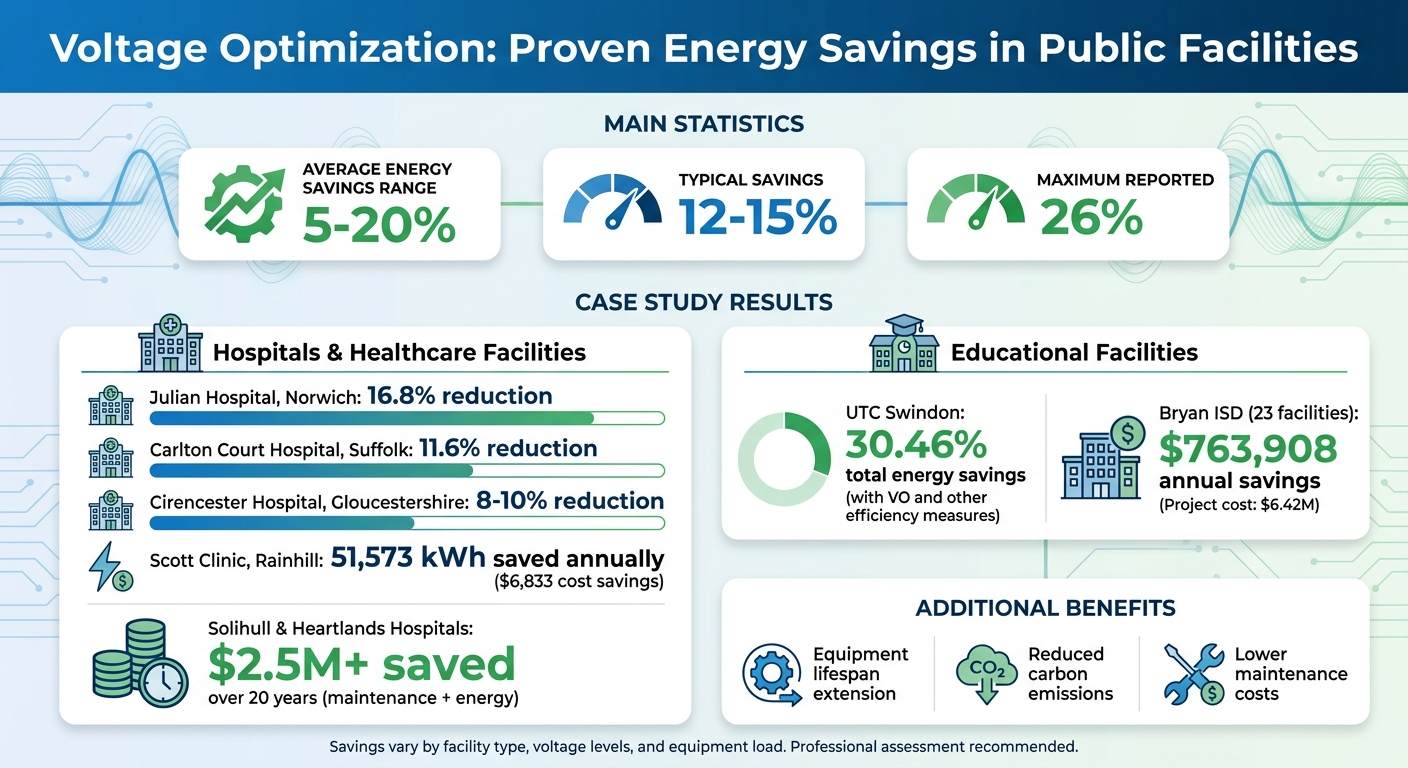
Public facilities like schools and hospitals often receive excessive voltage from the grid, leading to wasted energy and higher costs. Voltage optimization (VO) adjusts incoming voltage to match equipment needs, reducing electricity use by 5–20%. This approach helps lower energy bills, extend equipment life, and decrease carbon emissions.
Key points about VO:
- Energy Savings: Facilities can save 12–15% on average, with some reaching up to 26%.
- Equipment Longevity: VO reduces wear on motors, lighting, and electronics.
- Environmental Impact: Lower energy use means fewer emissions and reduced demand on the grid.
Facilities can implement VO through fixed or electronic-dynamic systems. A professional assessment is crucial to identify savings opportunities. Companies like E3 Design-Build specialize in tailoring VO solutions for public facilities, offering expertise in energy efficiency projects.
Main Benefits of Voltage Optimization for Public Facilities
Voltage Optimization Energy Savings in Public Facilities
Energy Savings and Lower Costs
Voltage optimization (VO) offers a practical way to cut electricity usage by ensuring incoming power matches the needs of equipment. When grid voltage exceeds what’s required, it leads to wasted energy, often turning into excess heat and power loss. VO systems address this by regulating voltage, which reduces kilowatt-hour (kWh) consumption and, ultimately, utility costs.
Take Julian Hospital in Norwich as an example – it saw a 16.8% drop in kWh use after installing powerPerfector VO units [1]. Carlton Court Hospital in Suffolk followed suit, achieving an 11.6% reduction, while Cirencester Hospital in Gloucestershire reported savings between 8% and 10% [1]. Meanwhile, Scott Clinic in Rainhill, Merseyside, implemented Powerstar VO technology, saving 51,573 kWh annually and cutting energy bills by around $6,833 [1]. Beyond energy savings, VO systems also lower maintenance expenses by improving power quality, which reduces equipment failures caused by over-voltage. For instance, Solihull and Heartlands Hospitals expect to save over $2.5 million in maintenance and energy costs over two decades [1]. These benefits not only reduce costs but also enhance the reliability and longevity of equipment.
Longer Equipment Lifespan
When voltage exceeds optimal levels, it stresses motors, lighting systems, and electronics, leading to quicker wear and tear. VO systems stabilize power, ensuring equipment runs within its intended limits.
This is especially important in facilities with heavy motor loads, like hospitals and schools, where HVAC systems and pumps are common. By reducing mechanical stress and vibration caused by over-powering, VO minimizes the risk of breakdowns. Electronic-dynamic VO systems are particularly effective at managing voltage fluctuations [1], offering better protection for critical environments. The result? Fewer repairs, lower replacement costs, and reduced downtime. This not only extends the lifespan of motors, lighting, and electronics but also lowers operational disruptions. On top of that, using optimized voltage contributes to a smaller environmental footprint.
Reduced Environmental Impact
Lower energy use means fewer carbon emissions, helping public facilities shrink their environmental footprint. VO works by addressing the mismatch between grid supply and equipment needs, preventing energy waste and supporting sustainability goals.
For example, UTC Swindon, an educational institution, achieved total energy savings of 30.46% through efficiency measures, including VO [2]. Similar initiatives often deliver 10%–20% energy savings while cutting carbon emissions [2].
Mark O’Grady from MITIE Engineering (North) highlights this advantage:
As the UK faces worsening power quality issues, voltage optimisation is emerging as one of the most-secure technologies for NHS sites to adopt as part of their sustainability strategies. [1]
Additionally, VO reduces the demand for new high-voltage transmission lines, which can disrupt ecosystems, cause habitat destruction, and lead to SF₆ greenhouse gas leaks [4][5].
sbb-itb-034f8e1
How Voltage Optimization Works
Core Mechanisms
Voltage Optimization (VO) systems are designed to manage energy use by fine-tuning voltage levels at the main electrical intake. These systems adjust the utility-supplied voltage to align with the specific needs of facility equipment, ensuring no energy is wasted.
Many commercial facilities receive voltage at the upper limit of what’s allowed, which often leads to unnecessary energy consumption. As SMARTech energy notes, "Excess voltage does not improve performance, it simply increases electricity consumption" [2]. VO systems address this by reducing the incoming voltage before it reaches the equipment.
This adjustment minimizes electrical losses in the infrastructure and cuts down on heat generation in the equipment. The result? A lower overall power draw across the facility, without requiring changes to daily operations. For facilities suited to this technology, VO typically generates electricity savings of 5–8%, and when combined with advanced monitoring and control systems, total savings can climb to 10–20% [2].
VO systems are particularly effective for locations with consistent, high power demands, such as schools and hospitals. Beyond energy savings, these systems also include safety mechanisms to protect equipment and ensure smooth operation.
Safety Features
To maintain reliability, VO systems come equipped with advanced safety features that safeguard both the system and the connected equipment. These systems continuously monitor incoming power, adjusting voltage levels in real-time to ensure equipment operates within its optimal range. This prevents undervoltage, which could damage sensitive electronics or strain motors.
Additional protections include surge protection, which shields against sudden voltage spikes from the grid, and inline fuses and circuit breakers that isolate the system in the event of electrical faults. By eliminating the stress caused by over-voltage, VO systems also reduce heat and mechanical wear on components, leading to longer equipment lifespans and fewer malfunctions.
Since VO systems provide consistent power conditioning without requiring modifications to existing equipment, they deliver uninterrupted, safe voltage regulation [2].
Steps to Implement Voltage Optimization in Public Facilities
Initial Assessment and Data Collection
To make the most of voltage optimization (VO), starting with a thorough assessment is key. Public facilities need to evaluate their voltage performance to identify potential savings. As SMARTech energy puts it, "Effective energy efficiency starts with understanding how electricity is supplied and used in practice, not just what appears on a bill" [2].
This process begins with voltage logging and measurement. By reviewing data, facilities can determine if their incoming electrical supply consistently operates at the higher end of the allowed range. It’s also important to analyze the load profile to identify the types of equipment in use. Facilities with motors, lighting, and fixed systems are usually the best candidates for VO, while those relying heavily on IT equipment may experience fewer benefits [2]. Additionally, an operational review – covering factors like operating hours, load patterns, and proximity to substations – helps gauge whether VO is a good fit [2].
Duncan Agnew, a VO consultant at EMSc (UK), stresses the importance of tailoring the solution to each facility:
Voltage optimisation is not an off-the-shelf solution. Buildings differ in requirements and a site-specific survey should be carried out, along with ongoing consultation to determine the perfect VO installation and to ensure maximum savings [1].
Installation and Integration
Once the assessment is complete and data is in hand, the next step is installation. To minimize disruption, this typically happens during off-peak hours or weekends. The VO system is installed at the main electrical intake, where it regulates incoming voltage before it’s distributed throughout the building. Importantly, this process doesn’t require any changes to the existing equipment.
For facilities like hospitals, where sensitive equipment is critical, electronic-dynamic VO technology is often used. This type of system manages voltage fluctuations and ensures stable power, protecting essential devices. In fact, healthcare facilities have reported energy savings of 11% to 17% in kWh consumption after tailored VO installations.
After installation, continuous monitoring ensures the system is working as intended.
Post-Installation Monitoring
Monitoring doesn’t stop once the system is in place. Ongoing oversight ensures the VO system continues to deliver energy savings. Automatic control devices track electrical voltage in real time, adjusting it as needed to match equipment demands and prevent energy waste [3]. Many facilities link VO data to their broader energy analytics platforms, making it easier to track performance over time. Regular evaluations confirm the system is operating within the optimal range for the facility’s specific needs, ensuring long-term energy efficiency and savings.
Working with E3 Design-Build Contractor for Voltage Optimization

Partnering with a specialized contractor can help maximize the long-term benefits of voltage optimization (VO) systems, ensuring they perform seamlessly over time.
E3’s Expertise in Public Facility Upgrades
E3, a design-build contractor based in Texas, focuses on improving energy efficiency in public facilities. With a client base of over 350 organizations across the state, E3 offers more than just equipment upgrades. They provide integrated solutions that combine voltage optimization with high-efficiency HVAC systems, LED lighting, and advanced automation technologies – delivering measurable cost savings.
The Texas Association of School Boards (TASB) has endorsed E3, stating:
TASB found a company to endorse, E3, that would serve districts regardless of size, location, wealth or needs. Most of all, TASB found a company they could trust [7].
This endorsement underscores E3’s reputation for reliable and effective energy efficiency solutions. For instance, between June 2020 and 2021, E3 managed a $6.42 million project for Bryan ISD, spanning 23 facilities. This initiative resulted in $763,908 in annual savings, financed through a 2% SECO LoanSTAR loan [6].
Tailored Energy Efficiency Solutions
E3 begins its process with a Utility Assessment Report (UAR), which pinpoints circuits with the highest potential for optimization. This allows them to customize voltage optimization strategies to fit the unique electrical requirements of each building.
Their commitment to minimizing disruptions is evident in their "occupied retrofits", as described by Rudy Rodriguez, Director of Maintenance at Donna ISD:
They came in on nights and weekends so we never disrupted any classes [7].
E3 employs a design-build model, where their team of engineers and contractors collaborates from the planning stages through project completion. This ensures that installations meet precise technical standards, supporting both voltage regulation and safety. Additionally, public facilities in Texas can take advantage of the SECO LoanSTAR program, which offers low-interest, fixed-rate loans for energy efficiency projects like voltage optimization [6].
Conclusion
Voltage optimization offers a practical way for public facilities to cut energy expenses while promoting environmental responsibility. By matching the incoming electrical supply to the specific needs of equipment, facilities can save between 5% and 20% on electricity. This approach also minimizes thermal stress, which helps equipment last longer and reduces maintenance costs[2]. These savings can then be redirected toward critical services or infrastructure upgrades, all while meeting stringent carbon reduction targets.
To achieve the best results, voltage optimization must be tailored to the unique electrical characteristics of each facility. A professional assessment is essential to identify areas of excess voltage and ensure a worthwhile return on investment.
E3 Design-Build Contractor brings the expertise and integrated strategies needed to maximize the benefits of voltage optimization for public facilities in Texas. Their team conducts detailed assessments to identify circuits with the highest optimization potential. Leveraging their design-build model, they ensure installations meet exacting technical standards. With a proven track record of serving over 350 Texas organizations and backing from the Texas Association of School Boards[7], E3 also integrates voltage optimization with other energy-saving upgrades like high-efficiency HVAC systems, LED lighting, and building automation for a well-rounded solution.
Public facilities looking to cut costs and enhance energy efficiency can start with a professional assessment to see how voltage optimization fits their goals. Take the first step toward improved efficiency and sustainability today.
FAQs
How do I know if my facility is a good fit for voltage optimization?
Facilities that receive incoming voltage higher than necessary – common in large commercial, industrial, or public buildings – might find voltage optimization useful. Consistently high voltage levels can lead to unnecessary energy consumption. By optimizing voltage, these facilities can lower energy costs and operate more efficiently. To determine if this approach is right for your building, start by measuring its voltage levels to see if they exceed the ideal range.
Will voltage optimization affect sensitive medical or IT equipment?
Voltage optimization, while beneficial in many settings, can pose challenges for sensitive medical and IT equipment if not carefully managed. Fluctuations in voltage can disrupt the performance of these systems or compromise power quality, potentially leading to malfunctions or reduced reliability. To prevent such issues, it’s crucial to plan and implement voltage optimization strategies that are specifically designed to meet the unique requirements of these critical systems.
How long does it take to see payback after installing a VO system?
Payback for a voltage optimization system usually falls between 1 and 3 years. The exact duration can vary based on factors such as the facility’s energy consumption patterns and its specific operating conditions. This makes it an economical choice for enhancing energy efficiency in public facilities.